Eagle Pro Roofing Resource Center | Houston, Sugar Land and The Woodlands
A roof can be one of the largest near-term expenses after buying a home. General home inspections are useful but may not answer every roof-specific question. During the purchase process, look closely at age, condition, leak evidence, repair records and major cost risks.
What homeowners should know
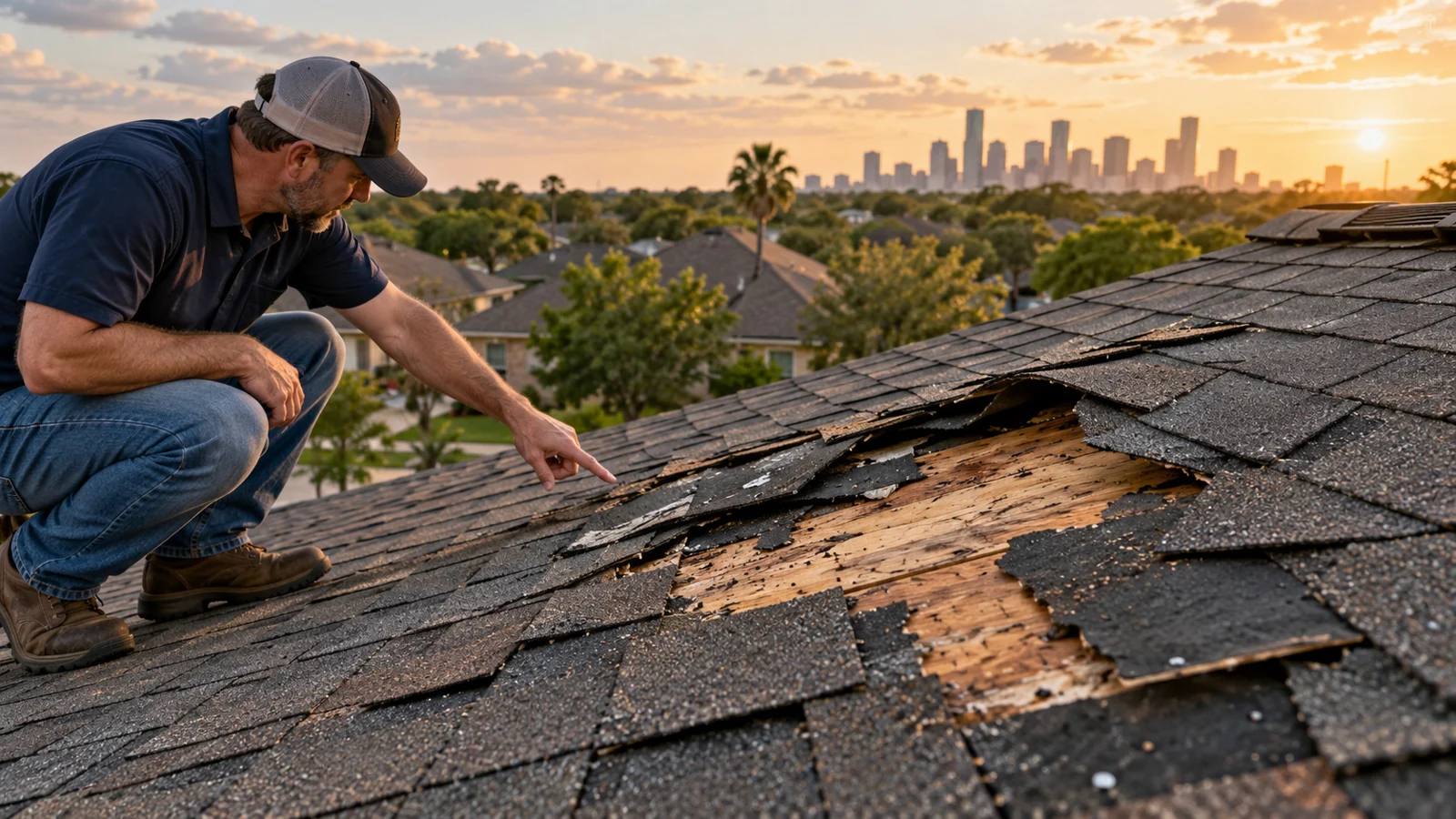
1. Missing or lifted shingles
Potential signs of age, wind damage or poor attachment warrant evaluation.
What to ask: “Can you show me exactly where this appears in my written proposal?” A careful explanation should distinguish work included in the base price from potential extra work.
2. Surface granule loss
Wear may be normal or unusual depending on age and concentration. It should be interpreted in context.
What to verify: Ask for photographs or a sample specification. Write down the answer while comparing contractors; memory is unreliable when estimates use different terminology.
3. Stained ceilings
Water stains can indicate current or historic leaks; request evidence about whether the source was corrected.
Why it matters in Greater Houston: Heat, humidity, heavy downpours and periodic high winds make the details of water management and installation worth discussing—not simply the appearance of the finished shingles.
A useful follow-up question: “Will this be shown on my written estimate or inspection report, and can you explain what happens if the conditions differ once the work begins?”
4. Damaged flashings
Check chimneys, vents, valleys and wall transitions.
Before agreeing: Request a written confirmation of the method or product and learn who makes the final decision if the crew discovers different conditions during the job.
5. Soft or sagging decking
These conditions can require further structural investigation.
How to compare alternatives: Have competing roofers explain their different approaches in plain language. A more expensive choice is worthwhile only when the added scope or performance is clear.
6. Ponding on low-slope areas
Drainage performance and roofing material suitability should be reviewed.
Insider takeaway: Quality depends on good diagnosis, suitable materials, correct installation and a process for resolving problems. No single product claim proves all four.
A useful follow-up question: “Will this be shown on my written estimate or inspection report, and can you explain what happens if the conditions differ once the work begins?”
7. Poor attic ventilation details
Ask whether the attic is designed as vented or conditioned and whether evidence of moisture exists.
What to ask: “Can you show me exactly where this appears in my written proposal?” A careful explanation should distinguish work included in the base price from potential extra work.
8. Inadequate repair documentation
Request permits where applicable, invoices and warranty information for prior major repairs.
What to verify: Ask for photographs or a sample specification. Write down the answer while comparing contractors; memory is unreliable when estimates use different terminology.
9. Unclear remaining roof life
Do not treat a casual age estimate as a guarantee. A roofer can help assess condition and replacement planning.
Why it matters in Greater Houston: Heat, humidity, heavy downpours and periodic high winds make the details of water management and installation worth discussing—not simply the appearance of the finished shingles.
A useful follow-up question: “Will this be shown on my written estimate or inspection report, and can you explain what happens if the conditions differ once the work begins?”
Before closing
Consider a roof-specific assessment during the inspection contingency and ask the seller for documented repair history.
Before agreeing: Request a written confirmation of the method or product and learn who makes the final decision if the crew discovers different conditions during the job.
Questions to take to your appointment
- What exact roof conditions did you observe, and can I see the photographs?
- Which repair or replacement options are reasonable, and why?
- What materials, labor, cleanup and protective measures are included in this price?
- Who supervises the work and how are changes approved?
- What installation instructions, warranty terms and permit requirements apply to this property?
Frequently asked questions
Does this advice apply outside Houston?
Yes. Homeowners in Houston, Sugar Land and The Woodlands can use the same comparison method, but jurisdictional permitting, product suitability and roof design can vary by address. Confirm the requirements for the actual property.
Should I choose the lowest roofing quote?
Not based on the total alone. First compare materials, tear-off, flashing, underlayment, ventilation, decking allowances, warranties and cleanup. A lower quote may still be good value if the work is comparable.
Can a contractor tell me what insurance will cover?
A roofer can document observed conditions, prepare repair estimates and discuss technical details. Your insurer determines coverage under your policy. Texas prohibits a contractor from acting as a public adjuster on a project the contractor provides or may provide work on.
The bottom line
Know the roof risks before you close. A roof-specific assessment can be a reasonable expense when the seller cannot explain prior leaks or recent repairs.
Request a roofing consultation in Greater Houston
If you are evaluating a roof repair or replacement, contact Eagle Pro and request a written assessment and clear scope of work. Bring these questions and ask for practical explanations of the options for your home.
References and further reading
- Texas Department of Insurance — Roofing and insurance: Know the law
- Roofing Contractors Association of Texas — Consumer guide
- Texas Department of Insurance — Insurance deductible guidance
Educational information, not an individualized roofing inspection, legal opinion or guarantee of insurance coverage. Confirm permit rules with the authority having jurisdiction and system details with the manufacturer.